
Contact Us
- All
- Product Name
- Product Keyword
- Product Model
- Product Summary
- Product Description
- Multi Field Search
Views: 0 Author: Site Editor Publish Time: 2025-11-18 Origin: Site


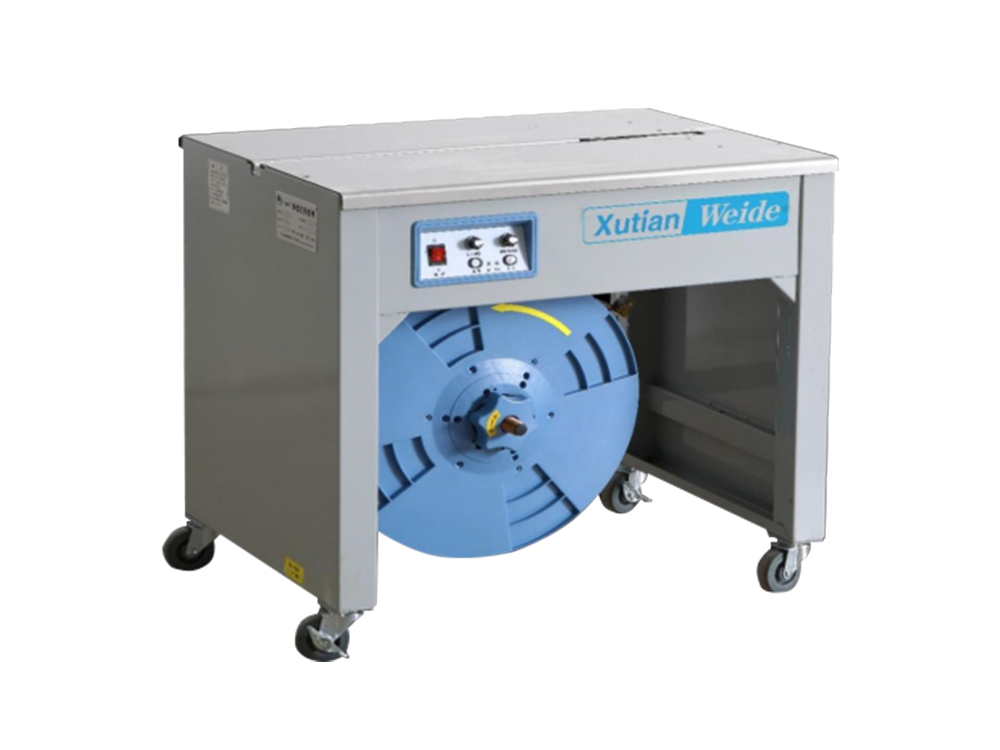
In modern manufacturing, warehousing, and logistics, choosing the right packaging equipment can make a huge difference — especially for small to medium‑scale operations. Semi‑Automatic Strapping Machines offer a balanced, cost‑effective way to streamline packaging without the complexity or expense of fully automated systems. In this article, we will explore in depth why Semi‑Automatic Strapping Machines are often the ideal choice for many businesses, how they work with PP Straps, and what specific advantages they bring.
Semi‑Automatic Strapping Machines are a type of Strapping Machine designed to combine manual input with automated strapping actions. In a typical setup, the operator manually loops the strap around the package, then the machine automatically performs tensioning, sealing (or welding), and cutting.
Compared with manual strapping (which is laborious and inconsistent) and fully automatic machines (which require higher investment and larger-scale operations), Semi‑Automatic Strapping Machines hit a sweet spot for businesses that handle moderate packaging volumes, need flexibility, and want reliable results without the costs and complexity of full automation.
Here’s a typical workflow for a semi-automatic machine:
Operator loops the PP Strap around the package and inserts the strap end into the machine.
Operator activates the machine (often via foot pedal).
The machine automatically tensions the strap to a pre-set level.
It then seals (usually via heat weld or friction weld) and cuts the strap, completing the bundling.
The package is now securely strapped; the machine is ready for the next cycle.
Because the tensioning and sealing are automated, the results tend to be much more consistent than manual strapping — more secure, with uniform tension and neat seals.
Here are the key advantages that make semi‑automatic machines appealing for many businesses:
Compared to Fully Automatic Strapping Machines, semi‑automatic models have fewer mechanical components and simpler designs, which translates to lower manufacturing and purchase cost.
For small to mid-size warehouses or packaging facilities, this makes a big difference: lower capital expenditure, yet still substantial productivity gains compared to manual strapping.
Semi‑Automatic Strapping Machines dramatically reduce the time per package compared to hand strapping.
Because tensioning, sealing, and cutting are automated, operators can process more packages per hour, improving throughput while reducing physical strain and guesswork.
The machine ensures uniform tension and secure sealing with every package — far more consistent than manual handling.
This reliability reduces the risk of package damage or load shifting, which is especially important for shipments and storage.
PP Straps are widely used due to their strength, flexibility, cost-effectiveness, and broad compatibility with strapping equipment.
Semi‑automatic machines can handle a variety of package sizes and shapes — from small cartons to irregular loads — making them versatile tools for diverse packaging needs.
Many semi‑automatic models accept common strap width ranges (e.g. 9–15 mm) and are compatible with standard PP Straps, supporting frequent or moderate load sizing changes without complex reconfiguration.
Semi‑automatic machines often have a compact design, requiring less floor space than large automated lines — ideal for small to medium‑scale operations.
They are easy to operate with minimal training — typically only needing basic instruction to feed the strap and start the cycle.
Their design reduces operator fatigue — fewer repetitive motions compared to manual strapping — which boosts safety and ergonomics.
Using PP Straps helps control material costs: polypropylene is relatively inexpensive and offers good tensile strength and durability.
PP strapping tends to cause less waste, especially when used with machines that automatically cut to the required strap length — contributing to more sustainable, efficient packaging operations.
Here’s a comparison table to help you evaluate which strapping method best suits your operation:
| Aspect | Semi‑Automatic Strapping Machines | Fully Automatic Strapping Machines | Manual Strapping |
|---|---|---|---|
| Initial Cost | Low to medium | High | Very low |
| Labour Requirement | Moderate — 1 operator per machine | Minimal — often no operator needed per package | High — fully manual |
| Throughput (packages/hour) | Medium to high (depends on operator) | Very high (machine-controlled throughput) | Low |
| Consistency & Tension Control | High | Very high | Variable — depends on worker |
| Flexibility (package size/variety) | High | Moderate to high | Very high (manual adjust) |
| Space Requirement | Low to medium | High (often conveyors) | Minimal but inefficient long term |
| Maintenance Complexity | Low | High | None |
| Suitability | Small to medium operations, mixed workloads | Large-scale, high-volume operations | Low-volume, occasional use |
For companies that dispatch medium volumes of goods — for example, retail distribution centers, small manufacturing facilities, or local warehouses — Semi‑Automatic Strapping Machines offer the right balance of efficiency, reliability, and cost. They allow for quick bundling without the need for large automated lines.
If your operation has a variety of package sizes, shapes, or types — from small boxes to irregular or bulky items — semi‑automatic machines provide the flexibility to handle these without reconfiguring complex automation. Many models are compatible with standard PP Straps and allow adjustable tension settings.
For businesses transitioning from manual strapping but not ready for full automation, semi-automatic machines are a logical stepping stone. They offer significant improvements vs. manual, without the cost and complexity of fully automatic systems.
Because of their compact footprint and ease of use, semi-automatic machines are suitable for smaller workshops, light manufacturing, or companies with seasonal demand where high-volume automation is not justified.
As the packaging sector evolves, several trends are shaping the use and development of Strapping Machines — including semi-automatic variants — and PP Straps:
Focus on Cost and Waste Reduction: With growing environmental awareness and cost pressures, companies increasingly prefer PP Straps because they are efficient, lighter, and often recyclable, reducing material waste compared to heavier materials like steel strapping.
Flexibility & Versatility Needs: As supply chains become more dynamic, businesses often face variable package types, batch sizes, and storage/shipping conditions. Machines that can adapt — like semi‑automatic ones — are receiving more attention.
Ease of Use & Operator Safety: Given labor shortages and regulatory focus on workplace safety, machines that reduce repetitive manual strain while ensuring secure packaging are more popular. Semi‑automatic models strike a strong balance.
Cost‑Effective Automation: Not every operation needs full automation. Many SMEs prefer semi‑automatic machines to gain efficiency without large capital outlay.
Sustainability & Eco‑Friendly Practices: Using PP Straps and optimizing strap usage helps reduce waste and resources, aligning with corporate sustainability goals.
Choose Semi‑Automatic Strapping Machines If:
Your packaging volume is moderate or variable.
You need flexibility for different package sizes, shapes, or irregular loads.
Budget constraints prevent investment in fully automated systems.
You have limited floor space or a smaller workshop/warehouse.
You want improved packaging consistency and safety compared to manual strapping.
You Might Skip Semi‑Automatic (and Go Fully Automatic) If:
You handle very high-volume packaging (e.g. large-scale manufacturing, high-throughput logistics).
You require minimal operator involvement and aim for maximal throughput.
You want to integrate strapping into a fully automated production line with conveyors, sensors, and palletizers.
You Might Stick with Manual Strapping (rare cases) If:
Packaging volume is very small, occasional, or unpredictable.
Space and budget are extremely limited.
The company prioritizes minimal capital expenditure over efficiency gains (though this often ends up being a false economy).
If you’re considering adopting a Semi‑Automatic Strapping Machine, here are some practical tips to get the most from the investment:
Choose the Right Strap Material: Use high-quality PP Straps — virgin polypropylene whenever possible — for good strength, durability, and consistent results.
Train Operators Properly: Even though the machine automates tensioning and sealing, operators must know correct strap feeding, insertion, and machine activation for safe, smooth operation.
Maintain the Machine Regularly: Clean sealing heads, check tension mechanisms, and perform routine maintenance to ensure longevity and consistency.
Optimize Workflow: Arrange workstations so that packages can be placed, strapped, and moved without unnecessary handling. For example, have packages ready near the strapping table to minimize walking.
Use Appropriate Strap Sizes: Ensure strap width and thickness match your packaging needs — too thin may risk breakage; too wide may be overkill. Many semi‑automatic machines support a range of PP Strap sizes.
For small to medium‑scale operations, Semi‑Automatic Strapping Machines provide a powerful, flexible, and cost-effective solution. They bridge the gap between manual strapping (inefficient and inconsistent) and fully automated systems (expensive and often overkill for modest volumes).
By combining operator input with automated tensioning, sealing, and cutting, semi‑automatic machines deliver consistent, secure packaging that dramatically improves efficiency while controlling costs. When used with PP Straps, they offer a reliable, versatile, and sustainable packaging solution suitable for a wide variety of industries — from warehousing and retail to light manufacturing and logistics.
If you prioritize flexibility, affordability, and improved packaging consistency — without committing to large-scale automation — Semi‑Automatic Strapping Machines are an excellent investment for your operation.
1. How do Semi-Automatic Strapping Machines differ from manual strapping in terms of efficiency and reliability?
Semi‑automatic machines automate tensioning, sealing, and cutting — reducing manual effort and delivering uniform, secure straps consistently, which is difficult to achieve with manual strapping.
2. Can Semi‑Automatic Strapping Machines work with different types of straps, or only PP Straps?
Most semi‑automatic machines are compatible with PP Straps (polypropylene) and sometimes other plastics or polyester straps — offering versatility for different packaging needs.
3. What types of packages are best suited for Semi‑Automatic Strapping Machines?
They work well for single boxes, cartons, bundles, pallets, and even irregular or heavy items — essentially any packaging where strap tension and secure sealing are needed.
4. Do Semi‑Automatic Strapping Machines require much maintenance?
Maintenance is relatively minimal: regular cleaning of the sealing head, checking tension components, and ensuring smooth strap feeding. With proper upkeep, they remain reliable and durable.
5. For a growing small business, when does it make sense to upgrade from Semi‑Automatic to Fully Automatic Strapping Machines?
Upgrading makes sense when packaging volume becomes high, throughput requirements increase, and you need minimal manual intervention — e.g. for high-volume warehousing, large-scale production, or integrated packaging lines.


